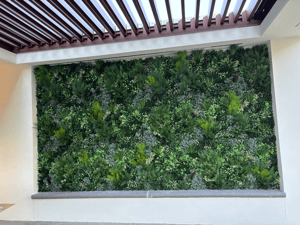
Bringing Biophilic Design into Behavioral Health Spaces with an Artificial Living Wall at Rutgers Brandt Behavioral Health
When it comes to designing behavioral health facilities, every detail matters. These environments must feel calm, supportive, and human-centered—without sacrificing safety, compliance, or long-term operational efficiency. At the Rutgers Brandt Behavioral Health Treatment Center & Residence in North Brunswick, New Jersey, UpScapers delivered an artificial living wall that supports biophilic design goals while meeting the rigorous demands of a healthcare setting. This project highlights how artificial green walls can transform behavioral health interiors by introducing the restorative presence of greenery—without the maintenance, risk, and unpredictability of live plant systems.
Why Artificial Living Walls Make Sense for Behavioral Health Design
Biophilic design has become a key trend in healthcare and behavioral health interiors, with growing emphasis on creating spaces that reduce stress, promote emotional regulation, and feel less institutional. Greenery plays a powerful role in that equation. In behavioral health facilities, however, live plant walls often present challenges: ongoing irrigation and maintenance requirements, risk of plant failure or decline, infection control considerations, and long-term operational complexity. Artificial living walls offer a practical alternative. They provide the visual and psychological benefits associated with nature-inspired design while delivering a controlled, low-maintenance solution that aligns with healthcare facility standards. For the Rutgers Brandt Behavioral Health project, the goal was clear: introduce biophilic impact in a way that felt reliable, durable, and appropriate for a clinical environment.
The Design and Construction Challenge
Behavioral health environments require careful coordination between architects, owners, contractors, and specialty trades. This project involved new construction, which meant the green wall installation needed to align seamlessly with broader construction schedules and documentation processes. Key challenges included: detailed pre-installation coordination and planning, formal product submittals and reviews, shop drawings and layout approvals, site survey and kickoff documentation, delivery of assembled panels with protection during construction, and scheduling flexibility as the overall build progressed. At the same time, the wall needed to meet performance criteria expected in healthcare interiors—fire-test compliance, durability, and consistent visual quality over time.
The UpScapers Artificial Living Wall Solution
UpScapers provided an artificial living wall system engineered specifically for commercial and healthcare environments. The specified system featured artificial foliage mounted to a steel grid, with overlapping plant coverage designed to fully conceal the structure and create a lush, natural appearance. The project specification required: a minimum of 16 coordinated plant varieties for depth and realism, materials compliant with NFPA 701 fire-test standards, UV-stabilized components for long-term color retention, shop-fabricated panel assemblies where possible, manufacturer-recommended mounting hardware, and installation in strict accordance with written manufacturer guidelines. This approach ensured the finished wall delivered both aesthetic impact and predictable performance—two priorities that are especially important in behavioral health facilities.
Outcomes: A Calmer, More Human-Centered Environment
The completed artificial living wall enhanced the interior of the Rutgers Brandt Behavioral Health facility while supporting operational practicality. For behavioral health settings, artificial living walls help: create a calmer atmosphere by softening interiors and reducing visual stress, support biophilic design strategies in a controlled, consistent way, eliminate the need for watering, pruning, or plant replacement, improve long-term reliability with fire-tested and UV-stabilized materials, and simplify project delivery through prefabrication and clear documentation. In spaces designed to support mental and emotional well-being, these benefits are especially meaningful.
Why the Client Chose UpScapers
This project required more than decorative greenery—it required a commercial-grade artificial green wall solution appropriate for a healthcare environment. The project specification called for documented performance criteria, coordinated review with the owner and architect, formal submittals, samples, drawings, and manufacturer-supported installation guidance. UpScapers was able to meet that level of rigor while delivering a visually rich biophilic feature. For behavioral health facilities, UpScapers offers: realistic, high-quality artificial greenery, materials suited for healthcare interiors, a predictable, low-maintenance ownership experience, and solutions that balance design intent with operational realities.
Conclusion
The Rutgers Brandt Behavioral Health project demonstrates how artificial living walls can play a meaningful role in behavioral health design. By combining the visual and emotional benefits of biophilic design with durability, compliance support, and low maintenance, UpScapers delivered a solution that supports both the design vision and the day-to-day needs of facility operations. For behavioral health environments, that balance is essential—and it’s exactly why artificial living walls continue to gain traction in healthcare interiors.
-1.png?width=1000&height=200&name=LOGO%20Elevated%20Landscape%20(1000%20%C3%97%20200%20px)-1.png)
.png?width=250&height=53&name=White%20Logo%20Transparent%20Background%20(1).png)