-1.png?width=1000&height=200&name=LOGO%20Elevated%20Landscape%20(1000%20%C3%97%20200%20px)-1.png)
.png?width=250&height=53&name=White%20Logo%20Transparent%20Background%20(1).png)
PROJECT
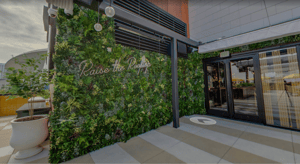
The Twelve Thirty Club, Nashville, TN – Restaurant Design Greening Project: All-Weather Faux Greenery
What We Did
What: Hospitality
Location: Restaurant
Materials:
-Multi-Species Greenery Panels
-Additional Stems for Blending
Other Details
- Install Date:
August 2021 - View 360 Tour >>
- Public Installation, Restaurant
TABLE OF CONTENTS
loading...
Concealing a Functional Access Door with an Artificial Living Wall at The Twelve Thirty Club
When it comes to hospitality design, every detail matters—especially in high‑end venues where the environment is part of the brand. At The Twelve Thirty Club in Nashville, Fox Restaurant Concepts needed a solution for a challenge many designers face: a necessary but visually intrusive access door in a premium guest area. Their goal? Maintain the club’s elevated, immersive atmosphere while keeping back‑of‑house operations running seamlessly. The answer was a custom integrated artificial living wall system—one that doesn’t just hide the door, but makes it vanish into the design narrative.Why Hide a Door with a Green Wall?
Access doors are essential for operations, but they can interrupt the visual flow of hospitality spaces. For brands like the The Twelve Thirty Club—known for sophisticated, high‑touch design—traditional fixes like paint, paneling, or basic camouflage weren’t enough. Modern hospitality design trends prioritize:- Immersive, photo‑worthy visual environments
- Seamless integration between front‑ and back‑of‑house functions
- Durable, low‑maintenance green design elements
- Ways to soften hard architecture with biophilic cues
Artificial green walls, especially premium multi‑texture systems, are becoming a top solution for concealing architectural interruptions while enhancing design impact.
The Hidden Challenge Behind the Wall
This wasn’t just about hiding a door. It required solving several real‑world operational and aesthetic hurdles:1. The door outline and hardware were impossible to hide with standard treatments.
Paint and paneling still created visible seams that broke the wall’s visual continuity.2. Previous solutions interfered with daily use.
Added materials restricted the door swing, added friction, or created safety concerns.3. The new solution needed to be code‑compliant.
Hardware had to remain accessible and functional—even if visually minimized.4. The wall sat in a high‑traffic, high‑visibility guest zone.
Meaning durability, realism, and maintenance requirements all mattered. The design team needed a solution that was beautiful, functional, durable, code‑friendly, and invisible.The Solution: A Seamlessly Integrated Artificial Living Wall Door System
UpScapers engineered a custom artificial living wall that spans the entire feature wall and wraps cleanly across the access door—creating a unified backdrop where the door visually disappears.Design Strategy That Made It Work
- Treated the door as part of the wall, not an interruption
- Extended artificial greenery panels continuously over the door
- Aligned foliage patterns across seams so the eye reads one uninterrupted surface
- Selected plant varieties with enough texture and depth to conceal edges and hardware without appearing dense or heavy
This approach ensures the feature reads as one organic, continuous installation.
Technical Integration: Engineering a Door That Disappears
A concealed green wall door has to do more than look good—it must operate smoothly. UpScapers engineered a custom mounting and substructure strategy specifically for this challenge.Key Technical Innovations
- Lightweight substructure:
Panels attach to a custom frame that moves with the door without adding operational drag. - Hardware clearances engineered precisely:
Hinges, levers, and swing paths remain obstruction‑free. - Code‑compliant access preserved:
Required hardware remains reachable—but visually softened by strategic foliage placement. - Durable, low‑maintenance materials:
Designed for the wear and tear of a busy hospitality venue.
The result is a door that functions like a normal door, but when closed, disappears into a lush green wall.
Results: A Win for Design, Operations, and Guest Experience
1. The Door Virtually Disappears
Guests see a sleek, continuous living wall—never suspecting a service door sits directly in front of them.2. Full Functionality Remains Intact
The door opens and closes freely, with no interference, resistance, or maintenance concerns.3. A Durable, Low‑Maintenance Finish
Artificial greenery ensures consistent beauty without watering, trimming, pests, or mess.4. A More Immersive Guest Experience
The wall becomes a visual feature, not a compromise—enhancing the brand story and creating a photo‑ready backdrop.What to Know Before You Build a Concealed Green Wall Door
If you're considering this type of installation, here’s what matters most:- Plan your substructure early
- Account for hinge and hardware clearances
- Choose foliage with depth and shadow to conceal edges
- Align panels carefully to eliminate visible breaks
- Verify life‑safety and code requirements
- Use high‑quality, durable artificial greenery for longevity
A hidden green wall door may look effortless—but it requires expert engineering and design coordination.
Why This Solution Works So Well in Hospitality Design
- Enhances guest immersion
- Solves functional challenges without compromising aesthetics
- Creates a strong branded moment
- Delivers the look of biophilic design without the maintenance of real plants
- Works anywhere a door interrupts a visual experience